Slovak Minister Blames Ukrainians for 1968 Prague Spring Crackdown: Historians Debunk Claims
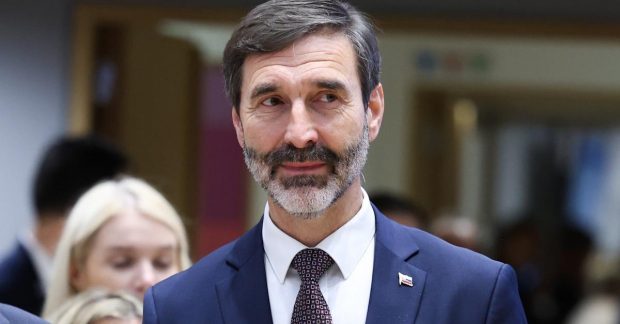
Slovak Foreign Minister Juraj Blanár claimed that Ukrainians were behind the 1968 Soviet invasion of Czechoslovakia. Experts and historical records fully refute these statements.
 👥Society
Photo: UNIAN
Key points
- Slovak Foreign Minister claimed Ukrainians were responsible for the 1968 invasion of Czechoslovakia.
- Opposition leaders and historians strongly refuted the claims.
- Soviet military units were not ethnically segregated.
- Political manipulation of history affects international perceptions of Ukraine.
Issues concerning historical memory and the interpretation of past events have once again taken center stage in political discussions within Slovakia. Recently, the country's Minister of Foreign Affairs, Juraj Blanár, expressed a controversial view regarding the 1968 Soviet-led military invasion of Czechoslovakia, which crushed the democratic reforms known as the Prague Spring. According to the Slovak official, responsibility for the operation allegedly lay with Ukrainians, claiming the first Soviet regiment was Ukrainian and that former Soviet leader Leonid Brezhnev was also born in Ukraine.
Opposition Reaction and Historical Facts
Such statements drew sharp criticism from the Slovak opposition. Michal Šimečka, leader of the opposition forces, reminded viewers during a television broadcast that the Soviet Union was a totalitarian prison of nations that oppressed all peoples, including Ukrainians, and that critical orders were issued directly from Moscow.
Historical evidence also debunks the Slovak narrative. Firstly, Leonid Brezhnev was ethnically Russian, despite being born in what is now Ukraine's Dnipropetrovsk region. Secondly, the Soviet military deliberately avoided ethnically segregated units; conscripts were drawn from all over the USSR regardless of where a unit was stationed. Although the troops crossing the Czechoslovak border belonged to the Carpathian Military District, they were organized on a territorial rather than a national basis.
«The Soviet Union was a prison of nations, and decisions were made in Moscow,» emphasized opposition politician Michal Šimečka.
For border communities, such historical disputes carry practical significance. Distorting historical facts in the political rhetoric of neighboring countries can negatively impact how Ukraine is perceived internationally and foster false stereotypes among the general public in European Union nations.
Source UNIAN — unian.ua/world/za-pridushennyam-prazkoji-vesni-v-1968-roci-stoyali-… ↗
Read next
 🛡️Security
Electricity restored in Rivne region following Russian attack
Power supply has been fully restored in the Sarny district of the Rivne region after a massive blackout caused by a Russian strike.
 🇺🇦Ukraine
Estonia's stance on the Gulf of Finland incident: Ukraine's right to self-defense
Estonian leaders commented on the strike against a Russian vessel, reiterating Ukraine's legitimate right to defend itself against aggression.
 🛡️Security
Elderly woman rescued from rubble in Dymer as death toll rises
Rescue operations continue in the Kyiv region following a drone strike on a residential building. The death toll has reached nine.
 🛡️Security
Russian corvette 'Merkury' in Libya: Likely hit by Ukrainian drones
Associated Press reports that a Russian warship was damaged in Benghazi, Libya, following a suspected Ukrainian sea drone attack.
 🛡️Security
Russia tests NATO defense algorithms through airspace violations, says Dmytro Kashchenko
The Russian Federation is systematically using missiles and drones to test NATO countries' readiness to respond to threats. Military experts emphasize the need to strengt…
 💡Tech
Scientists revive 40,000-year-old bacteria: climate risks of permafrost thaw
Researchers from the University of Colorado discovered that ancient microorganisms from permafrost are capable of active growth when temperatures rise.