Ancient Mayan Secrets: Dozens of Deity Sculptures Discovered in Guatemala Jungles
Archaeologists have unearthed approximately 40 stucco sculptures of Mayan deities in the ancient city of El Mirador using LiDAR technology.
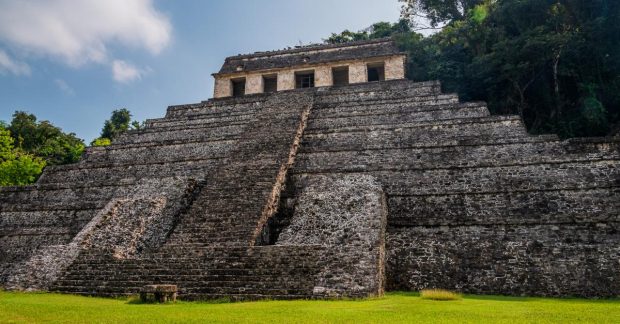 🎭Culture & Sport
Photo: UNIAN
Key points
- Archaeologists found 40 Mayan deity sculptures dating to 600–900 AD.
- LiDAR technology revealed a vast network of ancient roads and residential areas.
- El Mirador was a massive urban center with 200,000 residents and the 72-meter La Danta pyramid.
In the ancient city of El Mirador, located in the Peten department of northern Guatemala, an archaeological expedition has discovered about 40 complete sculptures and fragments of Mayan deity heads. These artifacts, crafted from stucco and plaster, date back to the Late Classic period of Mayan history, specifically between 600 and 900 AD. The discovery was made possible through LiDAR technology, which uses laser pulses to map objects hidden beneath dense jungle canopy.
Technological Breakthroughs in Archaeology
Researcher Douglas Mauricio noted that while many of the finds are currently undergoing restoration, several sculptures have already been documented in a laboratory in Guatemala's capital. Beyond religious artifacts, archaeologists identified ancient roads and a residential zone south of El Mirador. Enrique Hernandez, another lead researcher, described the extensive road network as resembling "modern highways," reinforcing the idea that the city served as a sophisticated regional hub.
The Grandeur of El Mirador
El Mirador is recognized as one of the first Mayan city-states, reaching its peak prosperity between 300 BC and 250 AD. Experts estimate that the city was home to approximately 200,000 people. One of its most significant structures is the La Danta pyramid, standing 72 meters tall, making it one of the largest pyramids in the world. The new data supports the hypothesis that El Mirador was a powerful administrative center controlling the entire surrounding region.
"The territory is planned for further investigation to verify the hypothesis that the ancient city could control the entire region," said Enrique Hernandez.
Alongside architectural achievements, scientists are also examining the environmental challenges faced by the Maya. Recent studies suggest that the civilization may have inadvertently contaminated their water sources with mercury found in the red paint used for buildings. This environmental impact persisted for centuries, highlighting the complex relationship between ancient urban development and nature.
Source UNIAN — unian.ua/science/dzhungli-prihovuvali-davnyu-tayemnicyu-arheologi-z… ↗
Read next
 🛡️Security
Electricity restored in Rivne region following Russian attack
Power supply has been fully restored in the Sarny district of the Rivne region after a massive blackout caused by a Russian strike.
 👥Society
Autumn Rose Care: Tips for Gardeners in Svaliava
Experts explain why it is better to wait for steady frosts before performing major rose pruning.
 🇺🇦Ukraine
Estonia's stance on the Gulf of Finland incident: Ukraine's right to self-defense
Estonian leaders commented on the strike against a Russian vessel, reiterating Ukraine's legitimate right to defend itself against aggression.
 🛡️Security
Elderly woman rescued from rubble in Dymer as death toll rises
Rescue operations continue in the Kyiv region following a drone strike on a residential building. The death toll has reached nine.
 🛡️Security
Russian corvette 'Merkury' in Libya: Likely hit by Ukrainian drones
Associated Press reports that a Russian warship was damaged in Benghazi, Libya, following a suspected Ukrainian sea drone attack.
 🛡️Security
Russia tests NATO defense algorithms through airspace violations, says Dmytro Kashchenko
The Russian Federation is systematically using missiles and drones to test NATO countries' readiness to respond to threats. Military experts emphasize the need to strengt…